
AI process automation
I automate the work nobody wants to do.
I use AI to automate company processes: invoices, orders, emails and reports. Your people get their time back for work that needs them.
In most companies, people still retype invoices, copy data between systems and chase approvals by email. I automate that work with AI, leave a person in charge of the exceptions, and stay until your team can run it without me.
What I do
Orders, approvals, emails and reports run on their own, from one system to the next. A person only checks the exceptions.
Invoices, contracts and forms are read, checked and entered into your systems without anyone retyping them.
Answer routine questions from customers and colleagues, draft replies and hand over to a person when needed.
Ask in plain words and get the answer from your own documents, with a link to the source.
Selected work
Beyond automation →Three tools, each for work people did by hand.
Hoardy, the largest, comes first. Each one started with reading, searching or comparing that took people hours, and ended with a tool that does it for them.
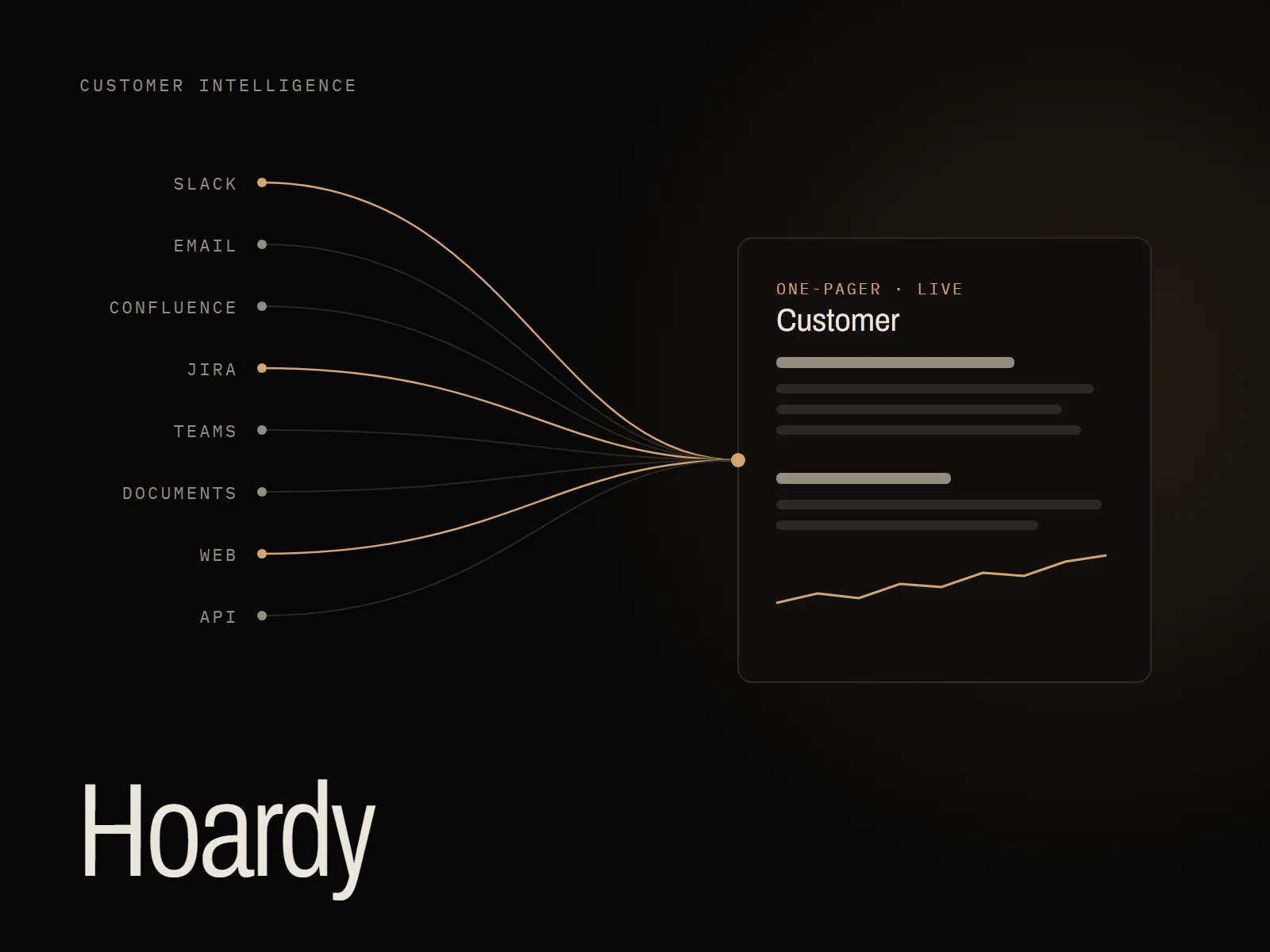 Flagship projectHoardy: one living picture of every customerOne place for the latest truth about every customer, built from Slack, email, Confluence, Jira and meetings without anyone typing notes. Preparing for an important call takes minutes instead of an hour.8→1sources, one picture of every customerRead the case study →
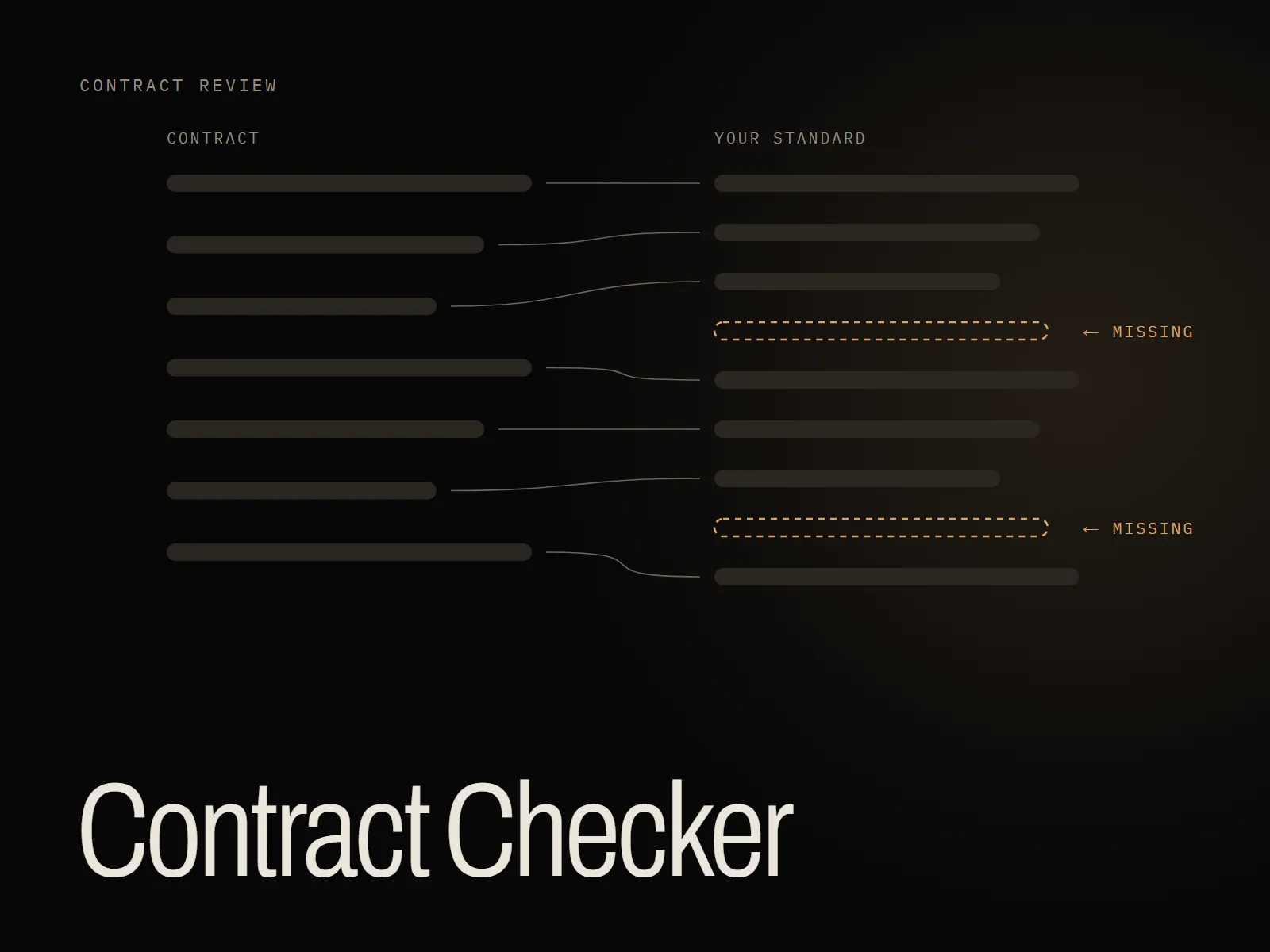 Contract review that checks what is missingA contract of any length is compared with your own standard documents. You get a list of missing clauses, contradictions and improvements, each with suggested wording, to work through in minutes.25real contract drafts checked against 10 polished onesRead the case study →
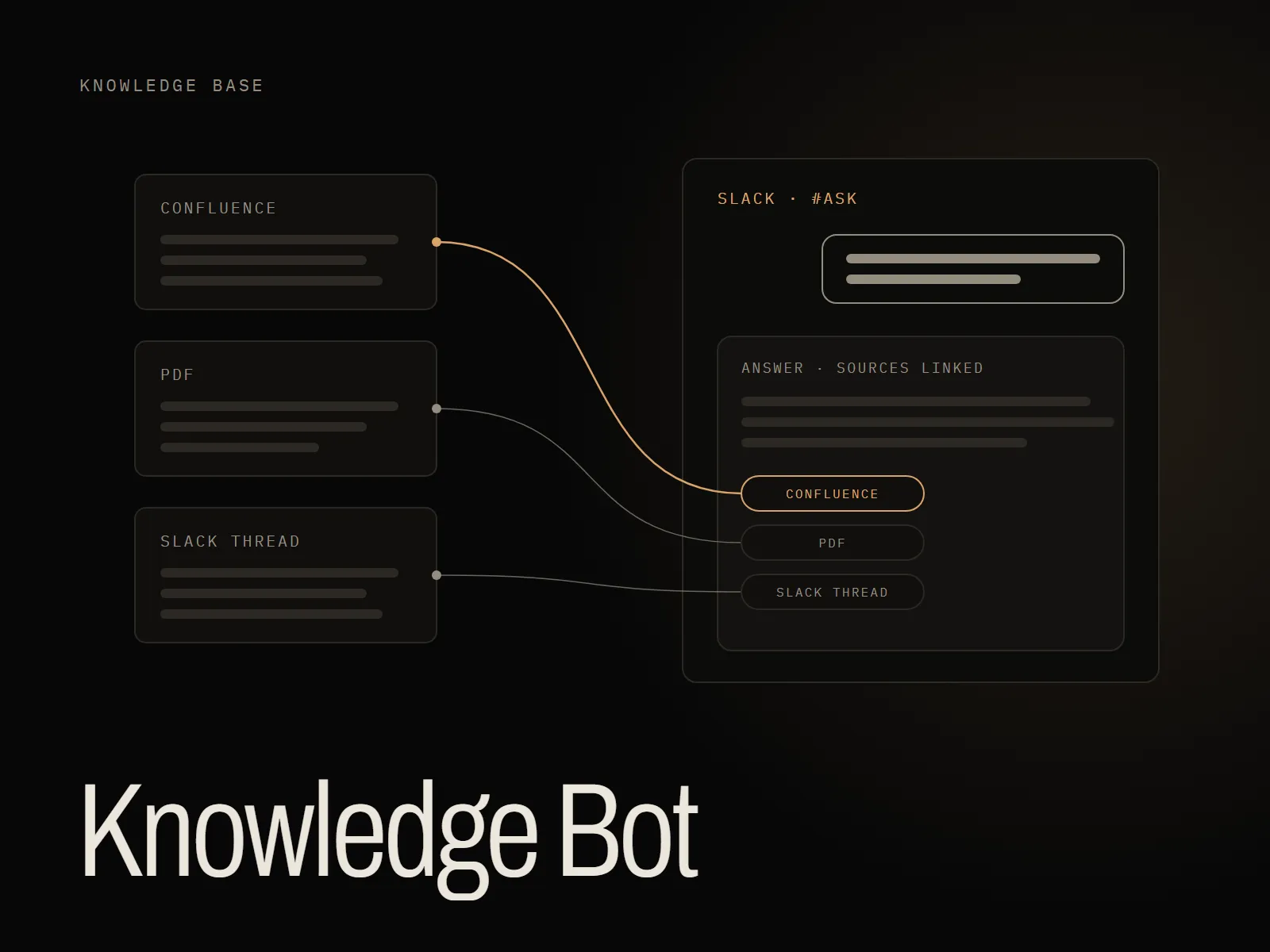 Company chatbot that answers from your own documentsEmployees ask technical questions in Slack and get an instant answer from the company documentation, with the sources linked, instead of interrupting an expert.1,100 hsaved per yearRead the case study →
Beyond automation
Besides process automation I write code, render video, produce music and build 3D scenes. Some of it for clients, some for myself.

Programming
Swarm Chess
End-to-end delivery, live in production around the clock: I designed, built, deployed and run it myself. A chess platform where a whole team votes on every move, up to 1,000 players in one game. It also has Stockfish training, tournaments and opening drills. Built with React, FastAPI and PostgreSQL.
Read more

AI video
Lipsynced music video
A music video for a client, made by an agent-run pipeline on my own hardware: I give the art direction, the agent does the rest. The video here is a demonstration pilot; the client's is private.
Read more

Animation
Empty Room: a cut-paper music video
My own song and my own film, start to finish: I wrote the lyrics, generated the music, wrote the story and made the video. A proof of concept for telling a music video's story in cut paper: a love that builds a house and a house that falls with it. The whole film is code. Every sheet, figure and camera move is generated in the browser and cut to the song's drum hits to the millisecond.
Read more




3D rendering
Airport stands
Commercial work: visualisations of four new stands at an airport, used as the vision for what would be built. Each one modelled, lit and rendered in Blender, deliberately without AI: the renders had to be pixel-perfect, with every stand, piece of furniture and material at its real size and in its real style, which image generators cannot guarantee.
Read more
About
Fifteen years of delivery in banking and security: four SAP rollouts across Asia run in parallel, and today four teams at ThreatMark, which protects banks from fraud with AI. I have been building AI since 2010, including LLM tools that run where data cannot leave the network.
How we start
The first three steps are free: two consultations to find the right process and check it can be automated, then a written offer with the return you can expect. Then you decide.
Free, no obligation
Free consultation
About an hour
We look for the business cases: which processes cost your team the most time, and which are worth automating first.
Check with the process owners
About two hours
With the people who run the process, we make sure the data and the way the work is done allow it to be automated.
Offer with expected ROI
Within a week
A written offer with the ROI estimate and an implementation plan: what I would build, what it costs, and how many hours and euros it should save each year.
Pilot on one process
Four to eight weeks
A working tool for one team, measured against the numbers in the offer.
Rollout and handover
At your pace
If the pilot pays off, it grows to other teams, and your people learn to run it without me.
What an expected return looks like: the company chatbot saves about 1,100 hours a year, roughly €13.60 for every euro it costs to run. See the calculation
Before you hire me
Your data stays yours, in your own environment.
The models run privately, on infrastructure you control. Your documents never go to a public chatbot, and they never train anyone's model.
Where do our data and the AI models run?
In your own environment, in an EU region you choose, such as Frankfurt. The models are called through a private service that does not store your prompts, does not use them for training and does not share them with the companies that make the models. Traffic can stay on private connections, off the public internet.
One example is Amazon Bedrock in the customer's own AWS account: most of my projects have run that way, with the data kept in the customer's own environment. Before that I built LLM tools to run inside a bank's perimeter, where data cannot leave the network.
What about GDPR and the EU AI Act?
Under GDPR you stay in control of your data: it is processed in the EU, only what the task needs is used, and access goes through your own accounts, with a log. If I need to see personal data, we sign a data processing agreement first.
Under the EU AI Act, most process automation, such as reading invoices or sorting emails, carries light duties: people must know when they are talking to an AI, and a person stays in charge of the decisions that matter. Uses such as hiring or credit scoring count as high-risk; I flag those before anything is built. Your lawyer or data protection officer has the final word, and I document what they need to give it.
What do we need to provide?
One process worth automating and the person who knows it best, for a few hours a week. Real examples of the work, such as documents, emails or exports, masked if you prefer. Access to the systems the tool should read from and write to, and help from your IT with where it will run.
How long until something works?
Weeks, not months. We start with one process and one team, and they have a working tool within weeks, used on real work. If it saves time, we build on it. If it does not, you have lost little.
How does pricing work?
The price depends on the process and is agreed before any work starts, so there are no surprises.
Which process costs your team the most time?
The consultation and the offer with expected ROI are free. Tell me which process it is, roughly how many people work on it and how many hours a week it takes them. I reply within two working days.